
⚠️ Content Notice: This post contains honest mentions of suicidal ideation and passive thoughts of self harm. I share my experience openly because I know I am not alone and I hope it helps someone feel less alone too. If you are currently struggling please know you are not alone and help is available.
988 Suicide & Crisis Lifeline: Call or text 988 (US) Available 24 hours a day, 7 days a week
This post contains affiliate links, which means I may earn a small commission if you make a purchase through my links — at no extra cost to you. I only ever recommend products I personally use and trust. Your support helps me keep this blog going and I appreciate it more than you know!
If you woke up this morning in pain, dragged yourself out of bed because your bladder gave you no choice, and spent the first fifteen minutes of your day barely able to straighten your own body, this post is for you.
If you’ve been handed diagnosis after diagnosis, prescription after prescription, and still feel like something nobody can name is quietly destroying your quality of life, this post is for you.
And if you’ve ever felt a rage or a sadness so consuming that you scared yourself or those you love and you’ve carried the guilt of that ever since while wondering if that’s just who you are, this post is especially for you.
It’s not who you are. It might be your MTHFR mutation. And there’s a difference.
What My Worst Days Actually Looked Like
I want to paint you a picture of what chronic inflammation from untreated MTHFR looked like in my life, because I think a lot of us have normalized suffering to the point where we don’t even realize how bad it actually is until we’re on the other side of it.
Every morning I woke up in full body pain. My hands were stuck closed, like they had locked overnight and forgotten how to open. My feet hit the floor and screamed back at me, plantar fasciitis in both of them, and I used to tell people my hands felt exactly the same way. I would lie in bed as long as humanly possible not out of laziness but because I knew the moment I started moving it was going to feel like I had been hit by a semi truck.
When I finally got up, my back was stiff, my legs were heavy and weak, my arms felt like they had been holding bricks all night, and gripping anything with my hands was a genuine challenge. Simple tasks like grocery shopping would wipe me out so completely that I needed the entire next day to recover. I love a clean home but deep cleaning would cost me several days of recovery afterwards. I spent years watching my life happen in slow motion through a fog of pain and exhaustion, unable to participate in it the way I wanted to.
I never thought I would plant a garden.
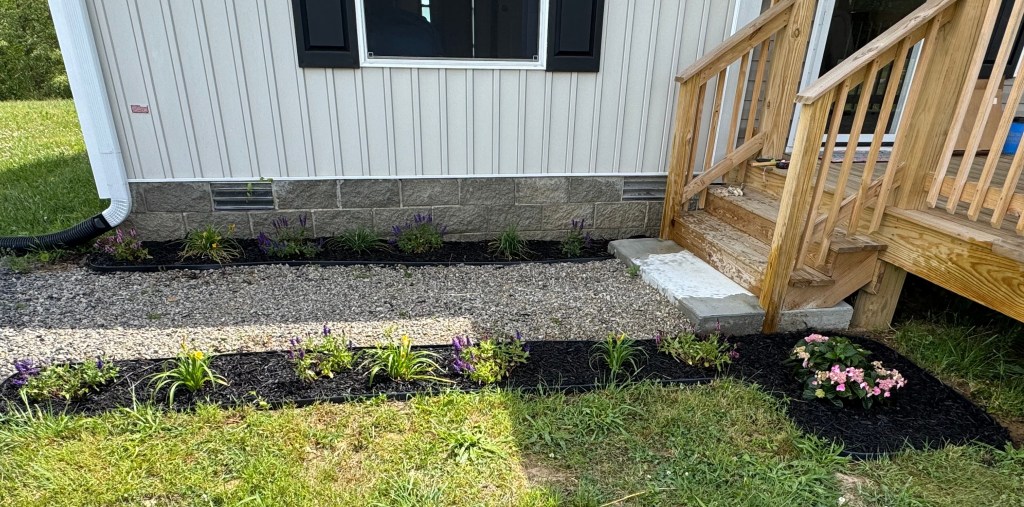
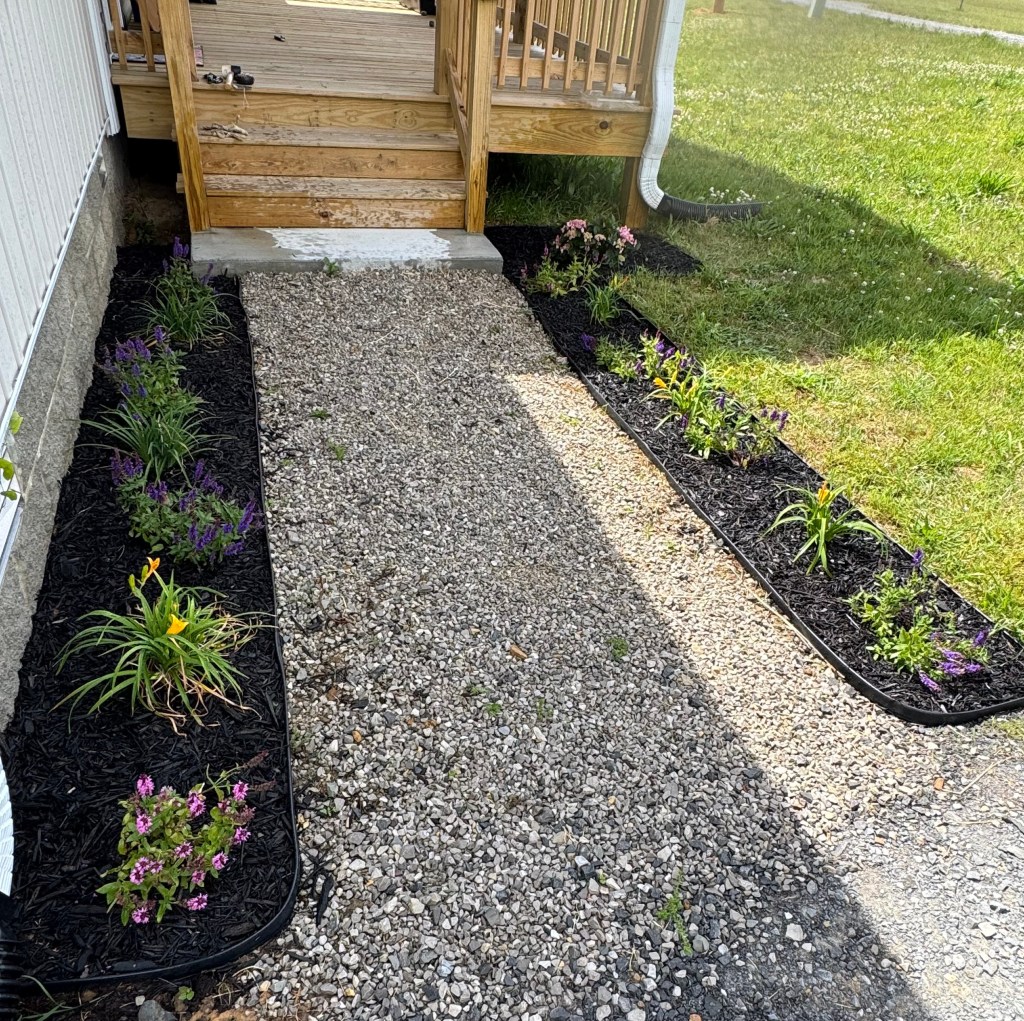
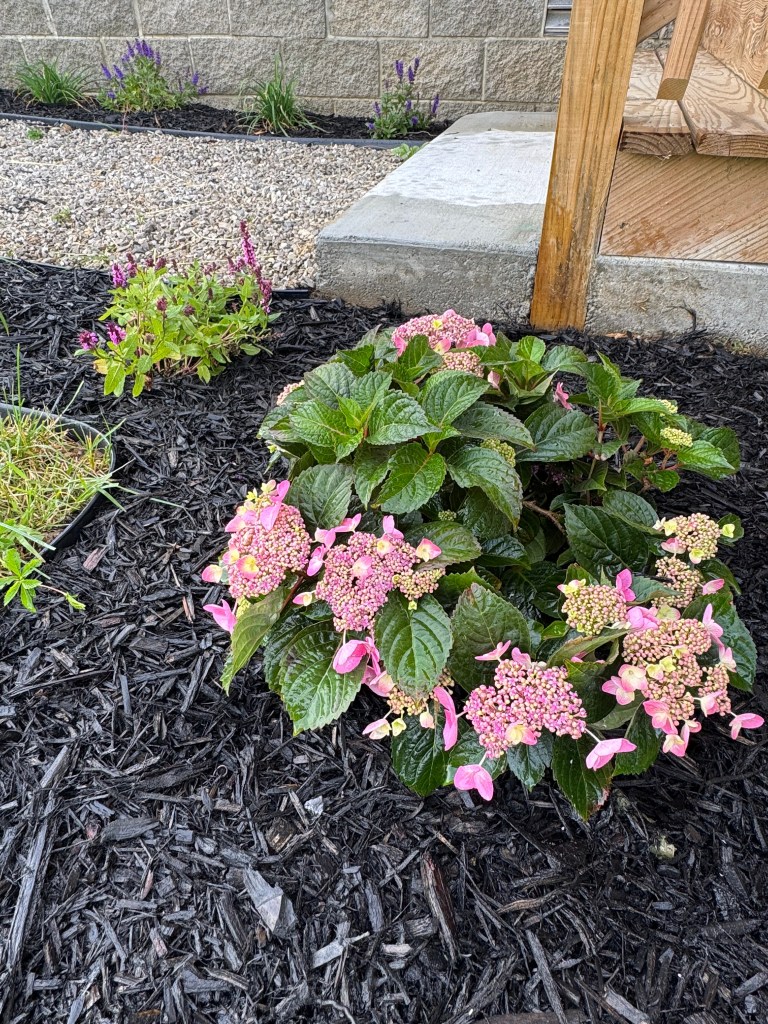
Last week I did. I removed sections of grass, carried bags of soil and mulch, dug holes in clay ground with a hand shovel before eventually remembering the big shovel existed, laid edging until it was straight enough to satisfy me, and planted six lilies, eight salvias and one hydrangea. By myself. I was tired the next day but I was up. I was fine. There were no days of recovery. No debt of pain to pay back.
I planted that garden right outside my bedroom window on purpose. Every morning when I get out of bed easily now and open the curtains, I can see it. And it reminds me of something I need to remind myself of every single day:
I can do hard things now. I am not slowly dying. I am actually living, for what feels like the first time in my life.
The Inflammation-MTHFR Connection
So what does a gene mutation have to do with full body inflammation?
Everything.
MTHFR affects your body’s methylation process, which is responsible for regulating inflammation among many other things. When methylation isn’t functioning properly, your body struggles to neutralize inflammatory triggers, process toxins efficiently, and repair tissue the way it should. The result can be chronic, systemic inflammation that shows up everywhere, joints, muscles, gut, skin, and brain, with no obvious single cause for doctors to point to.
This is why so many people with MTHFR mutations end up with diagnoses like fibromyalgia, autoimmune conditions, chronic fatigue syndrome, and inflammatory conditions that seem to have no root cause. The root cause is there. It’s just not being looked for.
Supporting methylation with the right supplements, particularly methylfolate and B12 in their active forms, gives your body what it needs to finally start doing its job. My inflammation didn’t disappear overnight but the improvement has been steady and real. I planted a garden. That’s all the proof I need.
13 Years Old, a Bipolar Diagnosis, turned into 11 Prescriptions
I was first prescribed medication for my mental health at 13 years old. I turned 36 this week. That’s more than two decades of trying to chemically correct something that was never a chemical imbalance in the traditional sense, it was a methylation problem nobody identified.
Every prescription either did nothing, turned me into a zombie, sedated me beyond functioning, made me erratic and violent, or gave me hives. Not one of them made me feel better. Not one of them made me feel normal. And once I had a bipolar diagnosis attached to my name, it became a ceiling that most doctors never looked past. Any concern I brought up was my anxiety. Any symptom was just stress. At one point I was on 11 prescriptions simultaneously and I couldn’t even tell you what most of them were for because I had reached the point of just trusting that the people with the medical degrees knew something I didn’t.
I want to be clear, this isn’t about hating doctors. I know good ones exist. This is just my experience, and it is the experience of far too many people with undiagnosed MTHFR.
Now I take my supplements and one small prescription. That’s it. The difference is not subtle.
The Hormonal Chaos Nobody Warned Me About
My partner knew my period was coming before I did. That’s how bad my hormonal mood swings were. The tears over nothing, the rage that came from somewhere I didn’t recognize, the emotional volatility that I couldn’t explain or control no matter how hard I tried.
The rage especially. I need to talk about the rage because I know I’m not the only one who has lived with this and I know how much guilt it leaves behind, guilt that I’m honestly not sure will ever fully go away.
I scared the people I love the most. I know that. I thank God every single day that they never left, that they still love me, because had I been on the receiving end of that version of me I can’t honestly say I would have stayed. That’s the truth and it sits heavy.
My road rage got bad enough that I scared myself too. I never endangered other drivers, I held onto that line fiercely, I’d tell myself that every single car on that road had children and animals in it. But the moment I had open road and space? I was erratic and I was FAST. And most of the time I was behind that wheel quietly hoping something would happen so I didn’t have to keep living the way I was living, without it being “intentional.”
I’m still here. And I think I know why.
I want you to hear this clearly: that rage is not who you are. It is not your personality. It is a symptom.
MTHFR affects neurotransmitter production, specifically the regulation of serotonin, dopamine, and norepinephrine, the chemicals that regulate mood, impulse control, and emotional response. When methylation is impaired, these systems don’t function the way they should. The result can look like bipolar disorder, rage, depression, anxiety, or emotional dysregulation that no amount of willpower or therapy seems to touch.
You are not a bad person. You are a person whose body has been running on empty for years, doing its best with a system that wasn’t getting what it needed. The people you love and scared and hurt, they deserve to meet who you actually are. And so do you.
My hormonal and emotional symptoms improved faster than almost anything else once I started treating my MTHFR. The mood swings stabilized. The rage quieted. I still have weight that doesn’t want to move easily and I’m working on that, but even that is a work in progress I feel hopeful about now rather than defeated by.
The Weight and the Hormones Nobody Connects
Unexplained weight gain, weight that won’t move no matter what you eat or how you exercise, is one of the most commonly reported but least discussed symptoms of MTHFR. Impaired methylation affects hormone regulation, thyroid function, insulin sensitivity, and the body’s ability to process and eliminate excess estrogen, all of which can contribute to stubborn weight that feels completely disconnected from your actual habits.
If you feel like you gain weight just thinking about food, you are not imagining it and you are not failing. Your body’s regulatory systems may simply not have the tools they need yet. Give them the tools.
What to Do If This Sounds Like You
Get tested. A simple blood test can confirm an MTHFR mutation. Ask your doctor directly or look into at-home options if you’re hitting walls. Functional medicine doctors and naturopaths tend to be significantly more knowledgeable about MTHFR than conventional physicians.
Start with the right supplements. Regular or synthetic folic acid actually makes things worse for people with MTHFR because the body can’t convert it properly and it builds up. You need methylfolate, the active form. I personally use and trust Seeking Health supplements because they are specifically formulated for people with MTHFR mutations. You can find exactly what I take on my Supplements & Nutrition page.
Reduce your toxic load. A body dealing with impaired methylation is already working overtime to detoxify. Every chemical product in your home adds to that burden. Start small, even just opening your windows every day is a real step. My Low-Tox Home & Wellness site has everything I personally researched so you don’t have to start from scratch.
Be patient with yourself. Healing from a lifetime of untreated MTHFR is not linear. Some things improve quickly. Others take time. All of it is worth it.
This Second Half Is Going to Be Different
I spent the first half of my life not knowing why I felt the way I did. Waking up every morning disappointed that I had. Wishing most days that I just wasn’t here anymore. Not knowing there was a reason for any of it. Not knowing there was something I could actually do about it.
I know now.
And I planted a garden last week that I can see from my bedroom window every single morning as a reminder that I am capable of hard things. That I am healing. That the second half of my life is going to be glorious.
If you are still in the first half of that story, still in the pain and the fog and the rage and the exhaustion, please keep going. The answers exist. You deserve to find them. And when you do, I promise you, there is a garden waiting for you on the other side.
I believe the reason nothing ever happened on those dark roads is because this is why I’m here. To find my way through and then reach back and show others the way.
🌿 — Ashley
If you are struggling and need support, please reach out to the 988 Suicide and Crisis Lifeline by calling or texting 988. You are not alone.
Find all my curated supplement and low-tox product recommendations at lowtoxliving.carrd.co — everything there made a real difference for me and I only share what I personally trust.
 lowtoxlivingdotblog
Leave a comment